Get to Know the Donkeys
The Hawaiian word for Donkey is Kekake. Our Kekake pair can usually be found behind the stone wall next to Lani Moo’s pen in our Keiki Zoo. The male’s name is Eeyore and the female is Dusty. Both were brought to Oahu from the Big Island during an operation to reduce the population of feral donkeys by relocation. When their ancestors were no longer required to work on coffee plantations, they were released into the deserts of Kona. However, conflict with human developement has put these culturally significant animals at risk.
While globally, donkeys are not endangered, their wild ancestor, the African wild ass, is critically endangered due to development. In addition, donkey meat is fast becoming a popular food for many Chinese populations, to the point where pet donkeys are being abducted or stolen from farms.
About
- Kingdom: Animalia
- Phylum: Chordata
- Class: Mammalia
- Order: Artiodactyla
Physical Characteristics
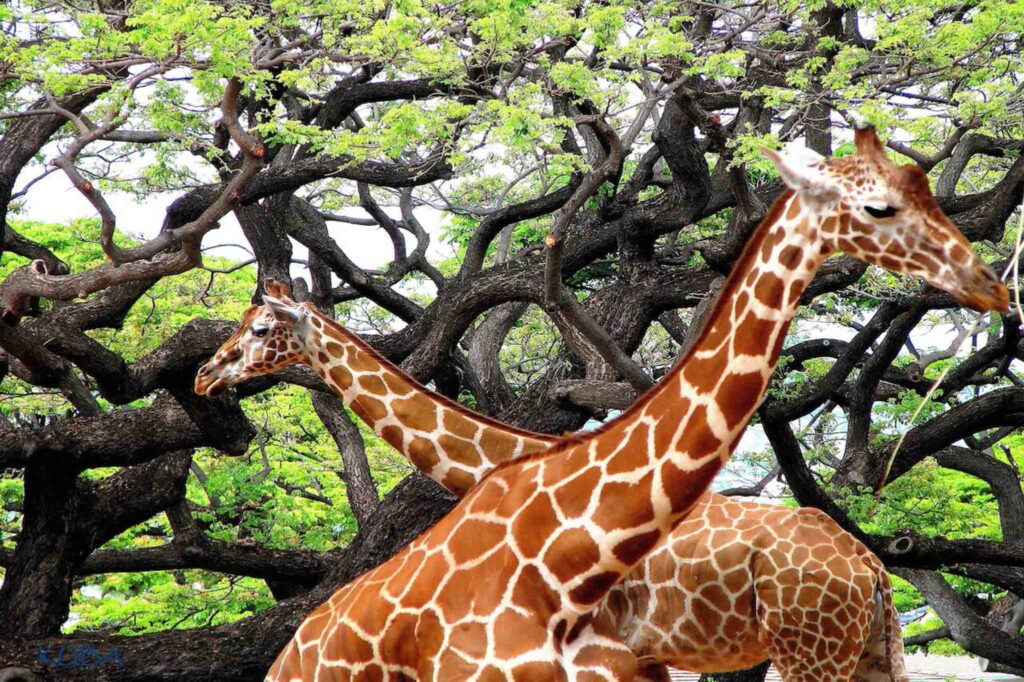
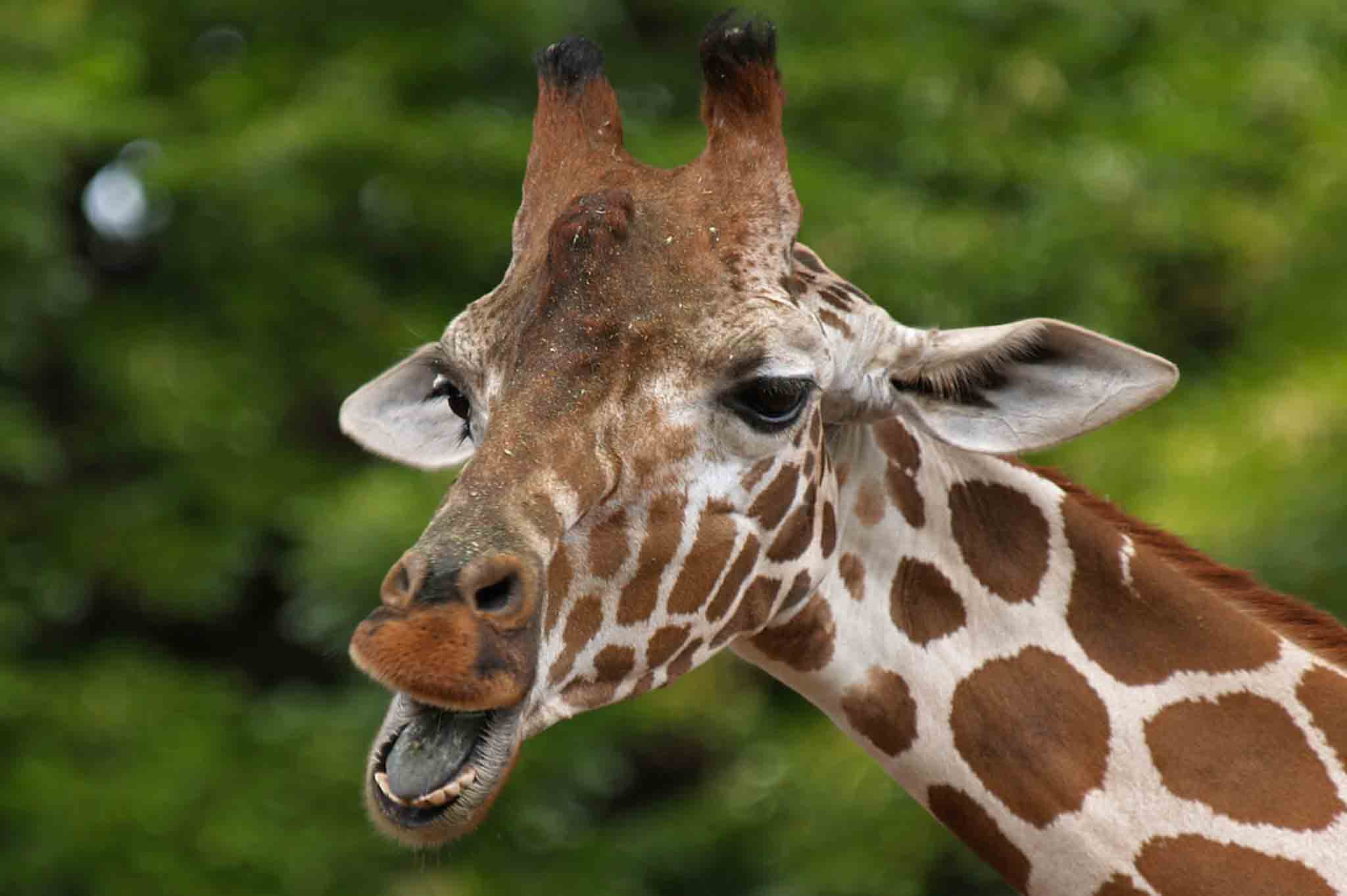
The Giraffe is the tallest animal in the world. Males may be 16-18 feet tall and weigh up to 2,000 pounds. Females are usually lighter and about two feet shorter. The giraffe’s front legs are only slightly longer than the back ones, the height of the fore part of the body being largely due to the heavy muscular development of the base of the neck.
The long neck has the usual seven vertebrae of most mammals, although each is greatly elongated. The giraffe’s soup-plate-sized hooves are used as offensive weapons, usually in the defense of the calves. The powerful kick from the front feet can kill a lion.
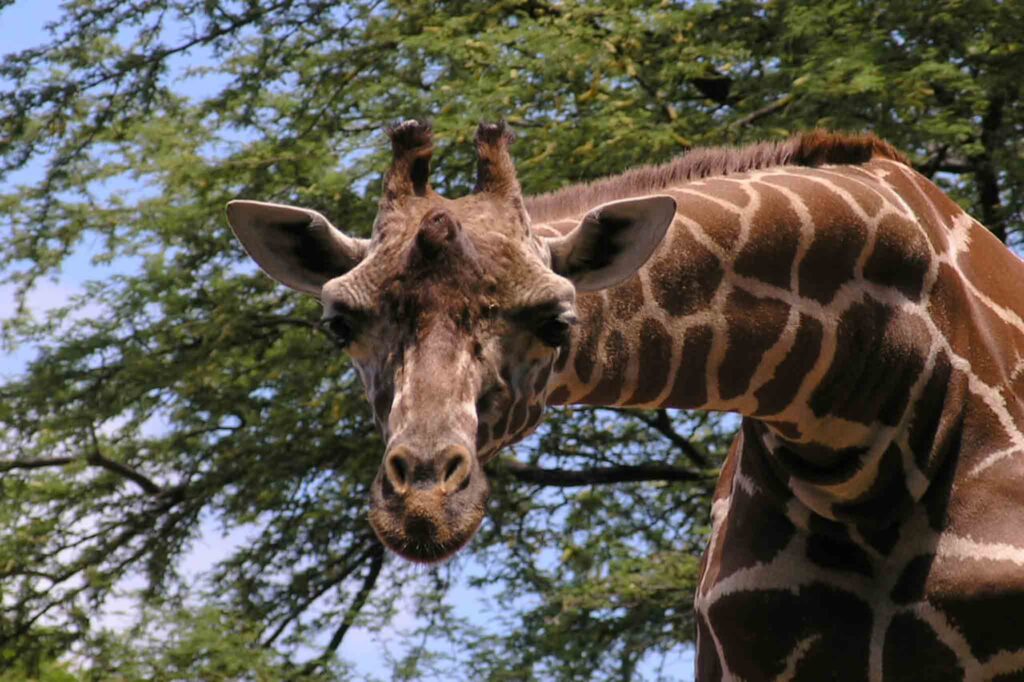
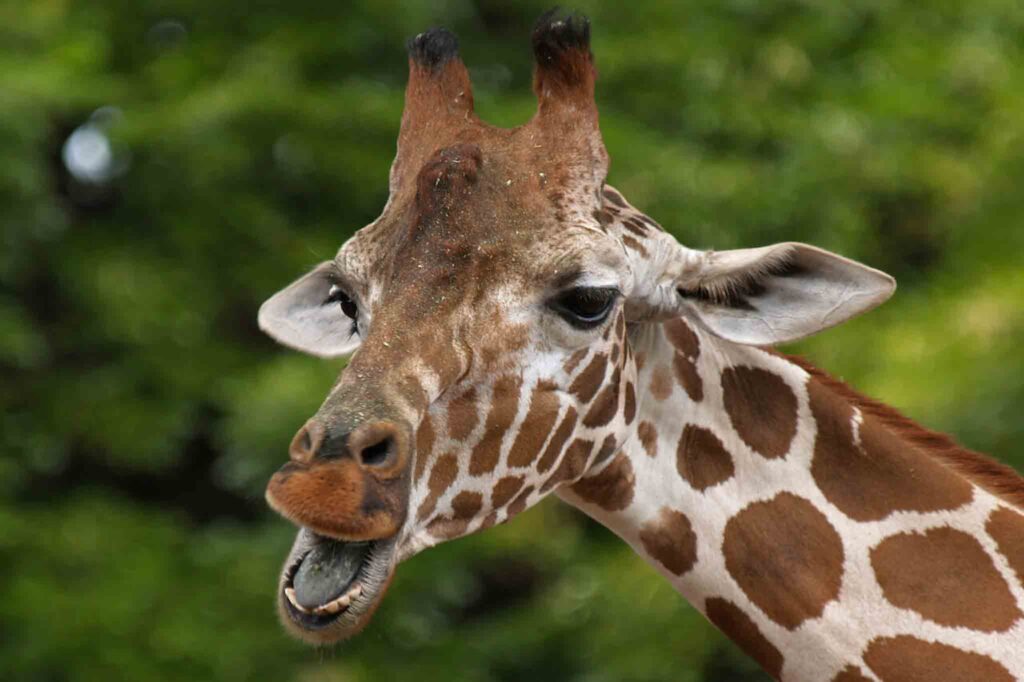
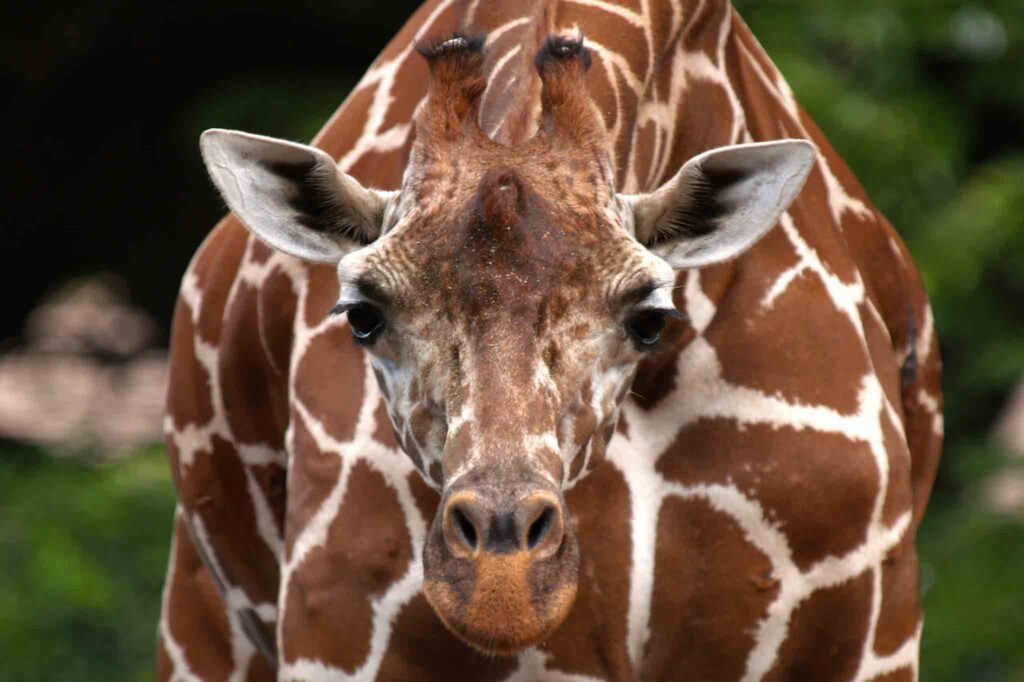
The giraffe is one of the few ruminant born with horns. Both sexes have horns which are covered with skin. The horns of males are thicker and heavier and are used in fights between males.
The giraffe’s incisor teeth are splayed out in two or three lobes to comb the leaves off shoots. Their long black tongue, which can be extended 18 inches, is used to gather food into the mouth. To compensate for the sudden increase in blood pressure when the head is lowered, the giraffe has very elastic blood vessels and valves in the venous system of the neck.
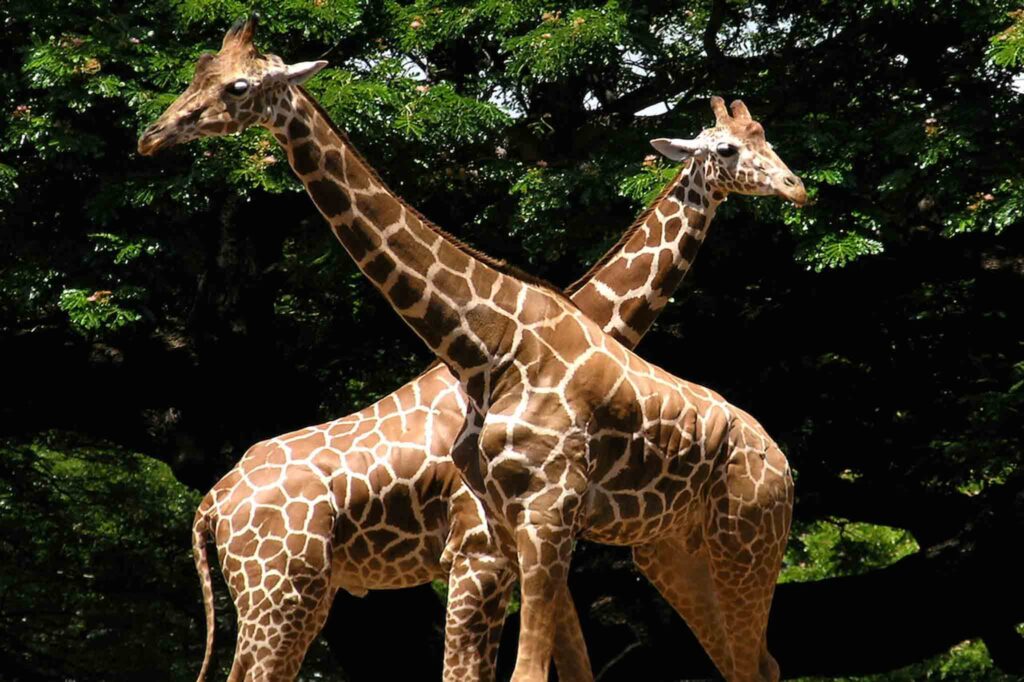
The Nubian giraffe’s color scheme varies considerably in pattern, but consists of dark-reddish to chestnut brown blotches of various shapes and sizes on a buff ground color. The coloration darkens with age.
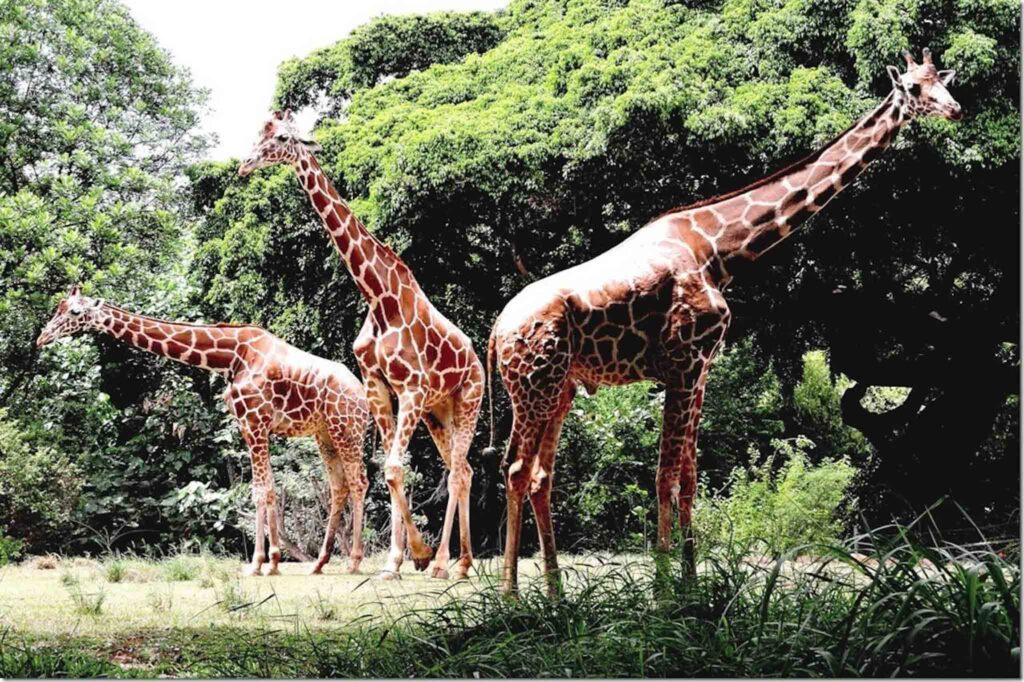
The reticulated giraffe has large, four-sided, liver-colored spots separated by a sharply defined network of narrow white lines.
Distribution
Giraffes inhabit savanna country where there are Acacia and climbing leguminous plants. They are found in Africa south of the Sahara to Cape Town. The reticulated giraffe is found in East Africa.
Behavior
Giraffes are highly selective feeders, the bulk of their diet comprising the leaves and shoots of trees and shrubs, supplemented by climbers, vines and some herbs.
Diet
As herbivores, donkeys feed mainly on grass, which includes some browsing. In the zoo they are fed grass, hay, zoo ration, trace minerals, and treats such as carrots and apples.
Reproduction & Growth
Female giraffes conceive for the first time in their fifth year. With a gestation period of 15 months, a mean interval between births of 20 months, and a maximum longevity of 25 years, a cow may produce up to 12 calves in her lifetime.
Newborn calves usually stand 6 feet and weigh approx. 150 lbs. After being dropped about 6 feet to the ground, they stand on wobbly legs about 20 minutes after birth and begin to nurse within 1 hour. Male calves are weaned at about 15 months, female calves a couple of months later.
At the Honolulu Zoo
Population:
Male: 1 (Ntamo, Died 2003)
Female: 0
Offspring: 0
Scientific Name: Giraffidae Giraffa camelopardalis reticulata
Population:
Male: 3 (Hassim, Nairobi, Makana aka “Squirt”)
Female: 2 (Sabouti, Yasmin)
Offspring: 3
Suggested Reading
1. Comparative Placentation (detailed reproductive information online).
2. Giraffe Husbandry Manual, Lorraine Jolly, 2003, Link to Online Manual