Get to Know the Speckled Mousebird
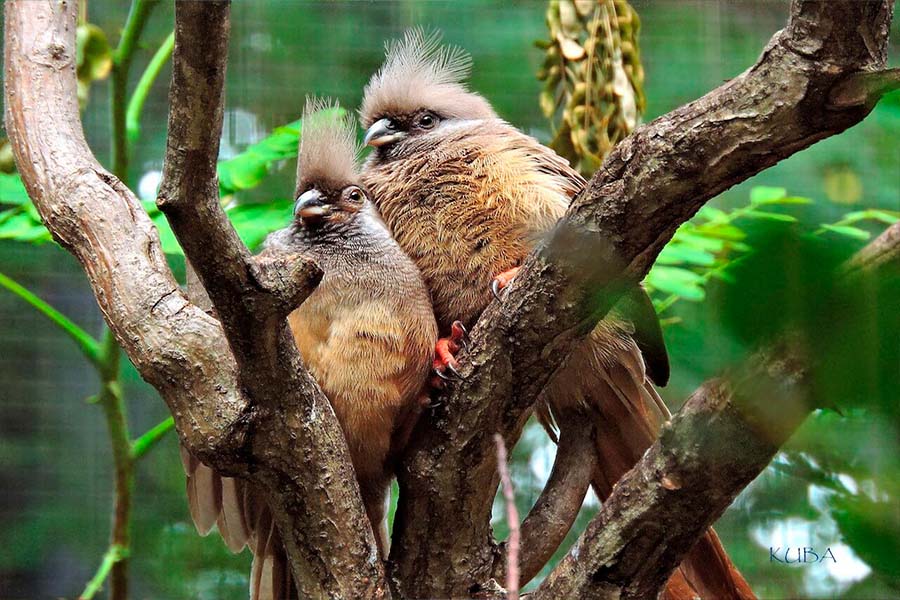
This bird is quite gregarious and very social. They engage in mutual preening and will feed together in groups. They scamper mouse-like along branches and climb using their bills and feet. They can also be seen dust bathing on the ground where sometimes they eat soil, possibly for the minerals.
As with group feeding, they will also roost in groups of 20 or more sitting very closely together. If the temperature becomes too cold, they will become torpid; this would make a single roosting bird easy prey. The group roosting helps protect them at times like that.
About
Scientific Name: Bucorvus leadbeateri
Kingdom: Animalia
Phylum: Chordata
Class: Aves
Order: Coliiformes
Physical Characteristics
They are predominantly brown in color and have a head crest of the same coloring. Its bill is black on the upper part and a pinkish color on the lower part of the bill.
Diet
They feed on fruit and berries.
Distribution
It is endemic to Africa. They are found in the southern parts of Sudan and Somalia, in Ethiopia, Nigeria and the Central African Republic. Further than 10 degrees south, they are found on the eastern part of Africa.
Mostly the speckled mousebird is seen in the open bush, savanna and woodlands. They can often be seen in gardens.
Behavior
This bird is quite gregarious and very social. They engage in mutual preening and will feed together in groups. They scamper mouse-like along branches and climb using their bills and feet. They can also be seen dust bathing on the ground where sometimes they eat soil, possibly for the minerals.
As with group feeding, they will also roost in groups of 20 or more sitting very closely together. If the temperature becomes too cold, they will become torpid; this would make a single roosting bird easy prey. The group roosting helps protect them at times like that.
Wild Population
Fairly prevalent.