Get to Know the New Caledonia Giant Gecko
Scientific Name: Rhacodactylus leachianus
This giant gecko is nocturnal and during the day, seeks shelter in the holes and cracks of trees. When night falls, they venture up into the canopy in order to forage.
Physical Characteristics
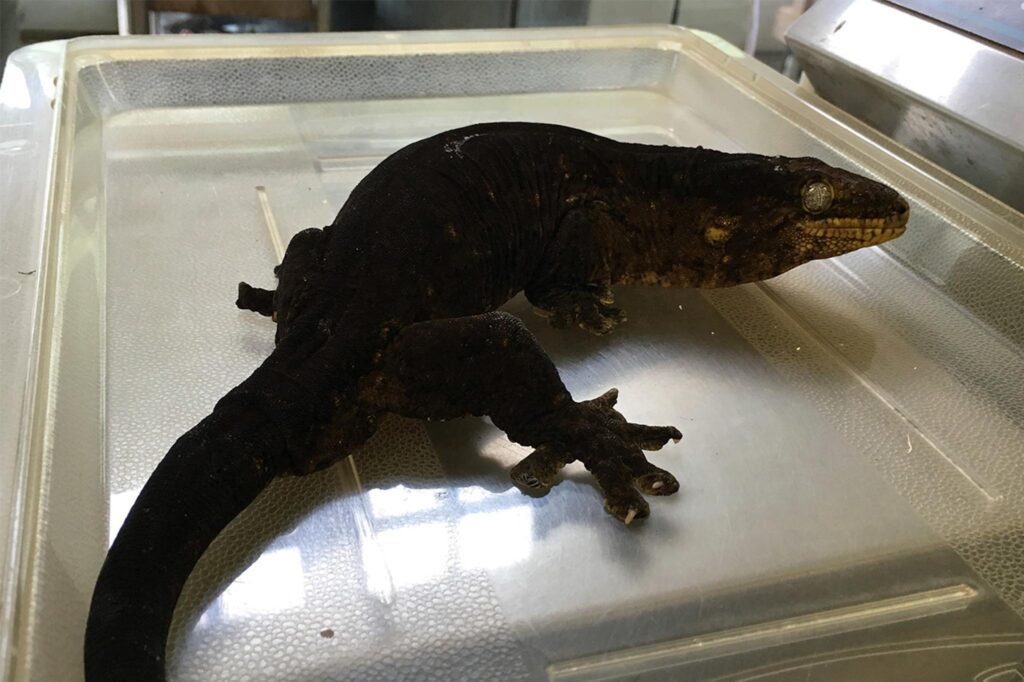
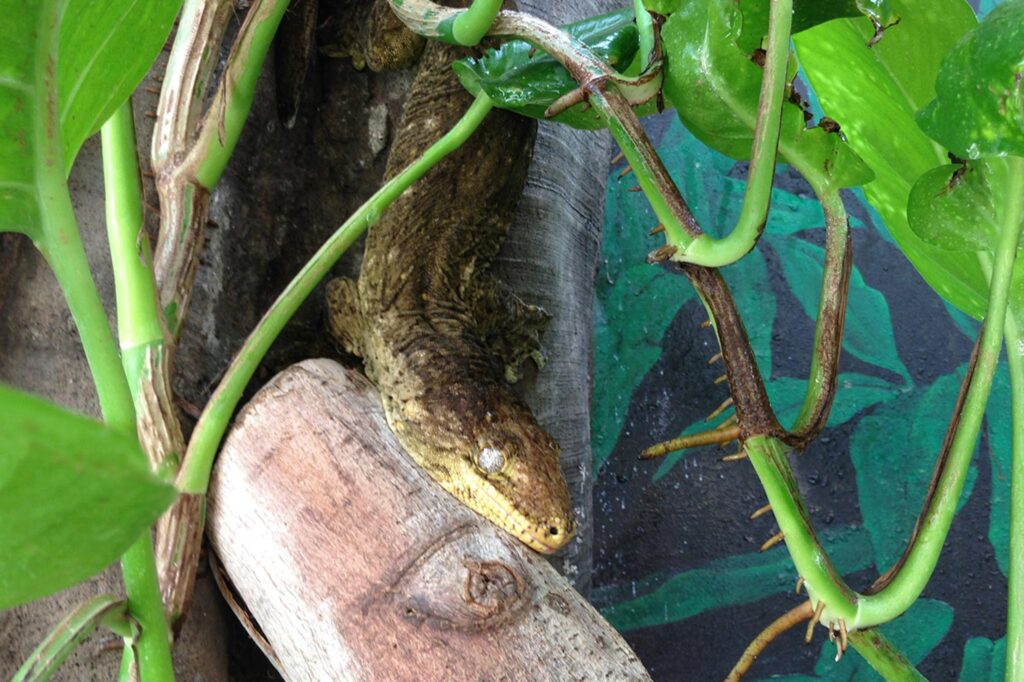
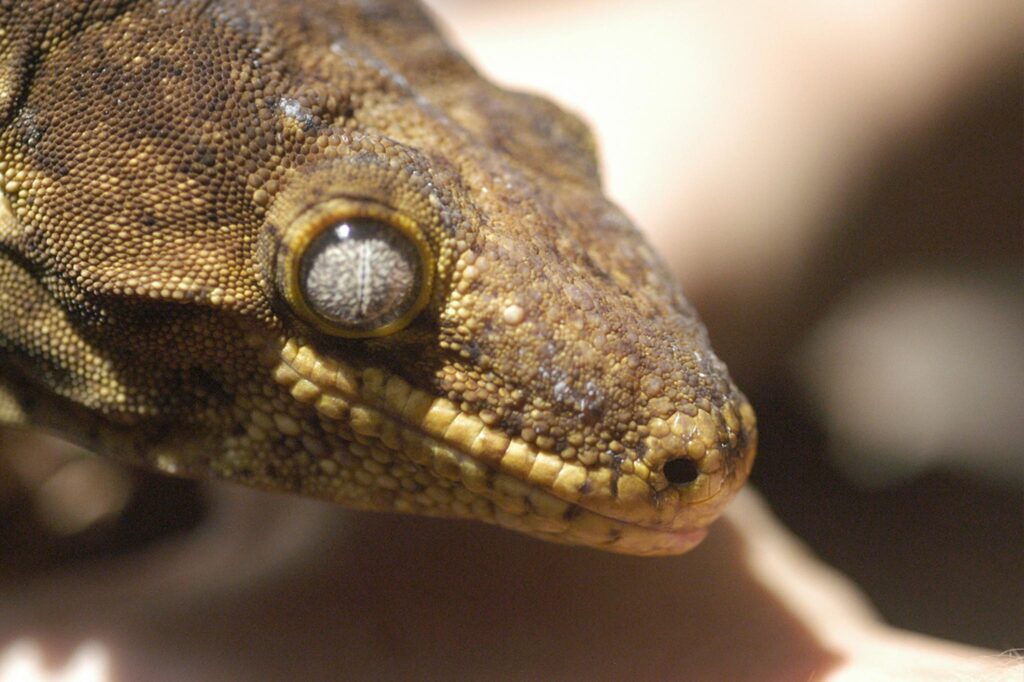
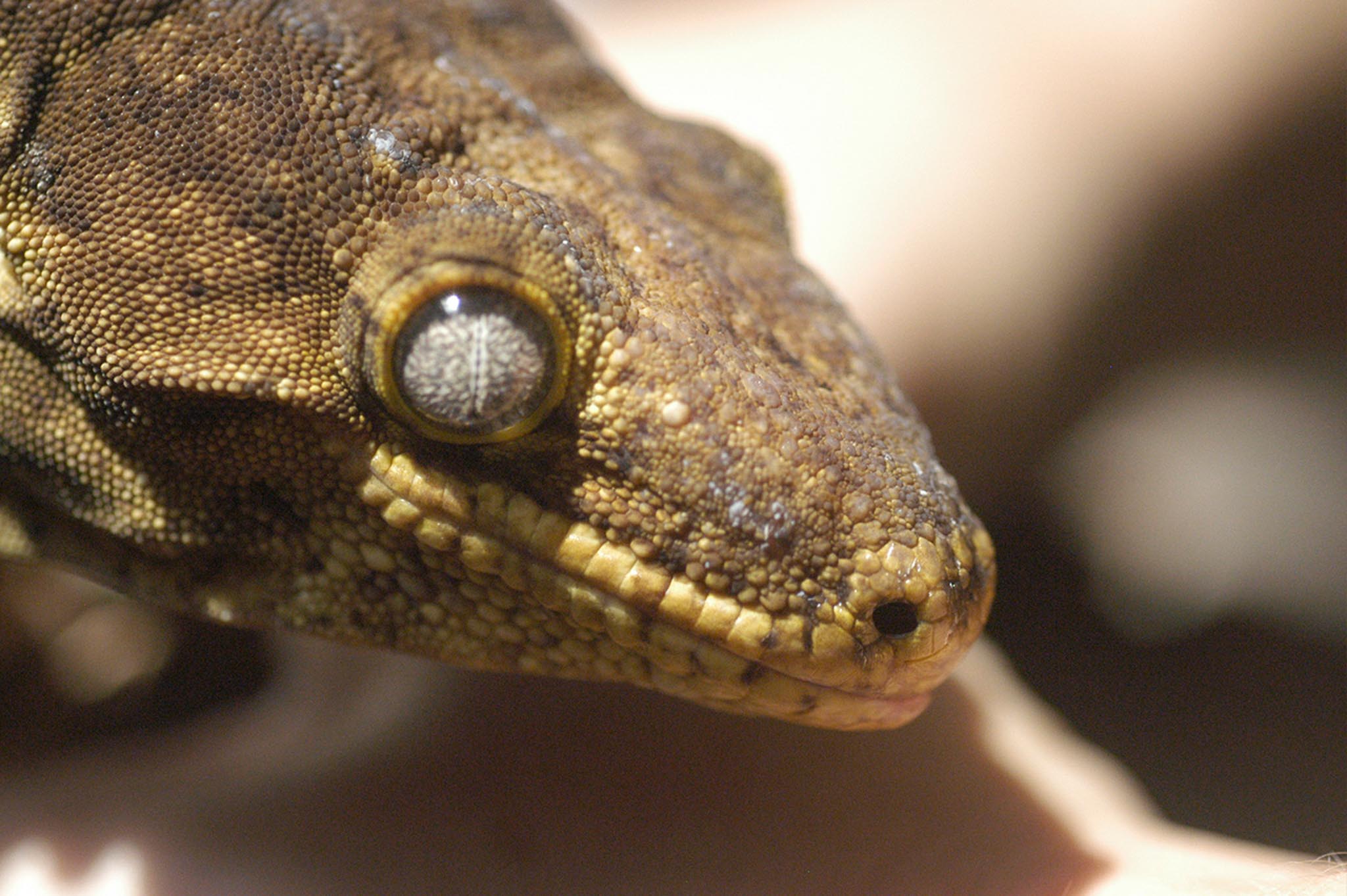
As their name implies, New Caledonia Giant Geckos can grow rather large, to 6-8 inches in length. They are the largest living gecko species. Among geckos, they have a relatively shorter snout and larger eyes. Their tails are fairly short compared to other lizards. This species sports an incredibly diverse range of colors. Among them are green, brown, gray, black, white, pink, and yellow. In addition, individuals from different regions are also known to exhibit a variety of patterns such as spots and banding.
Diet
In the wild, they have a seasonally varied diet. During the warmer months their diet mainly consists of fruit, but after the growing season, they will switch to insects and sometimes small birds to survive.
Distribution
With the exception of the northeastern regions, this species occurs over much of New Caledonia Island’s forests at elevations of 500m to 1,100m.
Reproduction & Growth
Males will attract females with clucking calls and head-bobbing. Sex is temperature dependent at a range from 60-80 degrees Fahrenheit. Much of what is known about these animals comes from captive specimens and information on mating in the wild is scarce.
Behavior
This giant gecko is nocturnal and during the day, seeks shelter in the holes and cracks of trees. When night falls, they venture up into the canopy in order to forage. Like many geckos, this is a noisy species with clucks, whistles, hisses, and chirps in its repertoire. They are also known to employ head-bobbing as a means of visual communication.
Notes on Conservation
These geckos are a species of Least Concern under the IUCN and their population is stable. The greatest potential threats to them are continued loss of habitat as well as introduced predators such as pigs, dogs, cats, and rats.
At the Honolulu Zoo
Of our three New Caledonias, the male, Lace, is the one who is usually on exhibit. Lace is usually hiding in plain sight, relying on his superb camouflage to keep himself unnoticed.
Citations
http://www.iucnredlist.org/details/176166/0http://www.reptilespecialty.com/giant-gecko-care-sheet-rhacodactylus-leachianus.htmlhttp://leapinleachies.com/articles.htm?article=5
http://www.iucnredlist.org/details/176166/0
http://www.reptilespecialty.com/giant-gecko-care-sheet-rhacodactylus-leachianus.html
http://leapinleachies.com/articles.htm?article=5http://www.iucnredlist.org/details/176166/0
http://www.reptilespecialty.com/giant-gecko-care-sheet-rhacodactylus-leachianus.htmlhttp://leapinleachies.com/articles.htm?article=5