Get to Know the Manu-o-ku
Unlike many birds, they do not build nests. Instead, a single egg is laid in the depression on a tree branch or ledge, and both parents share responsibility in incubating it.
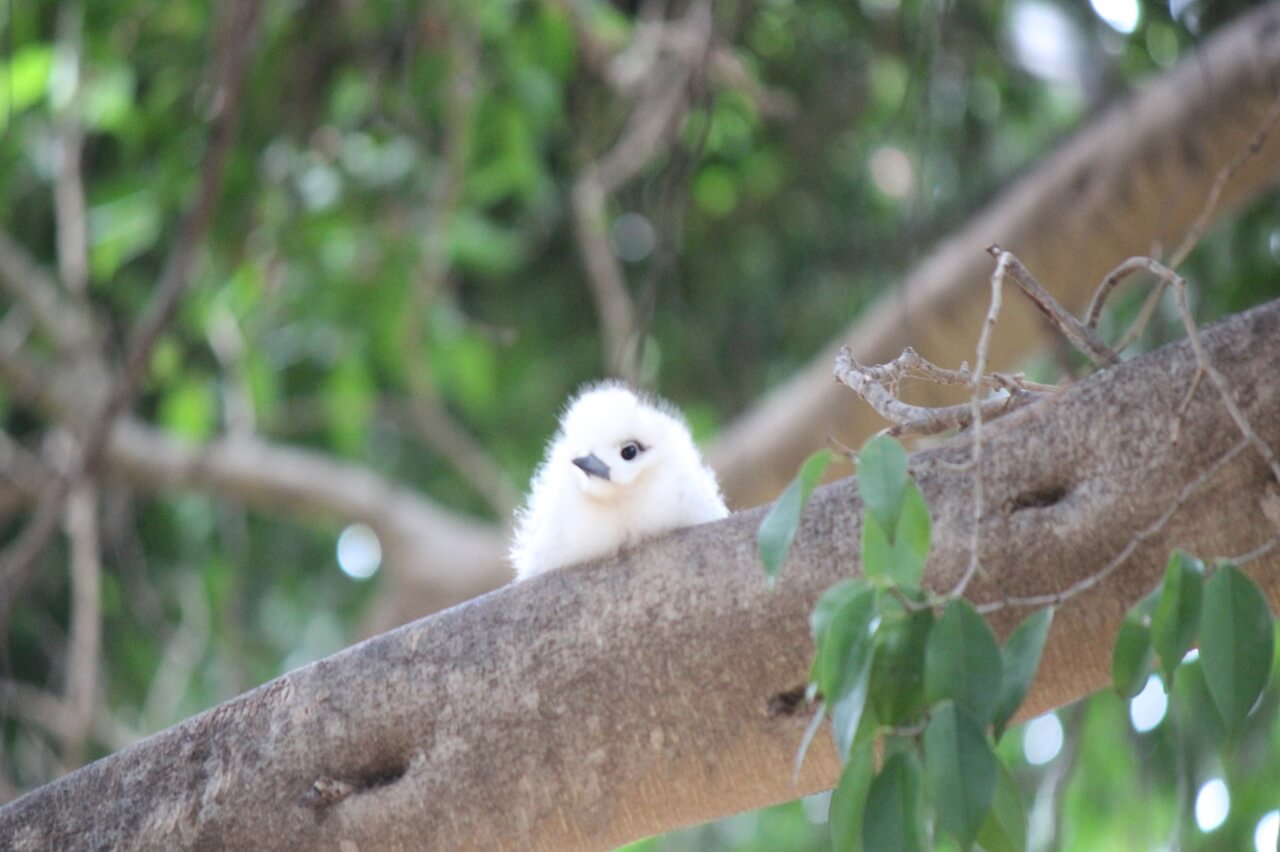
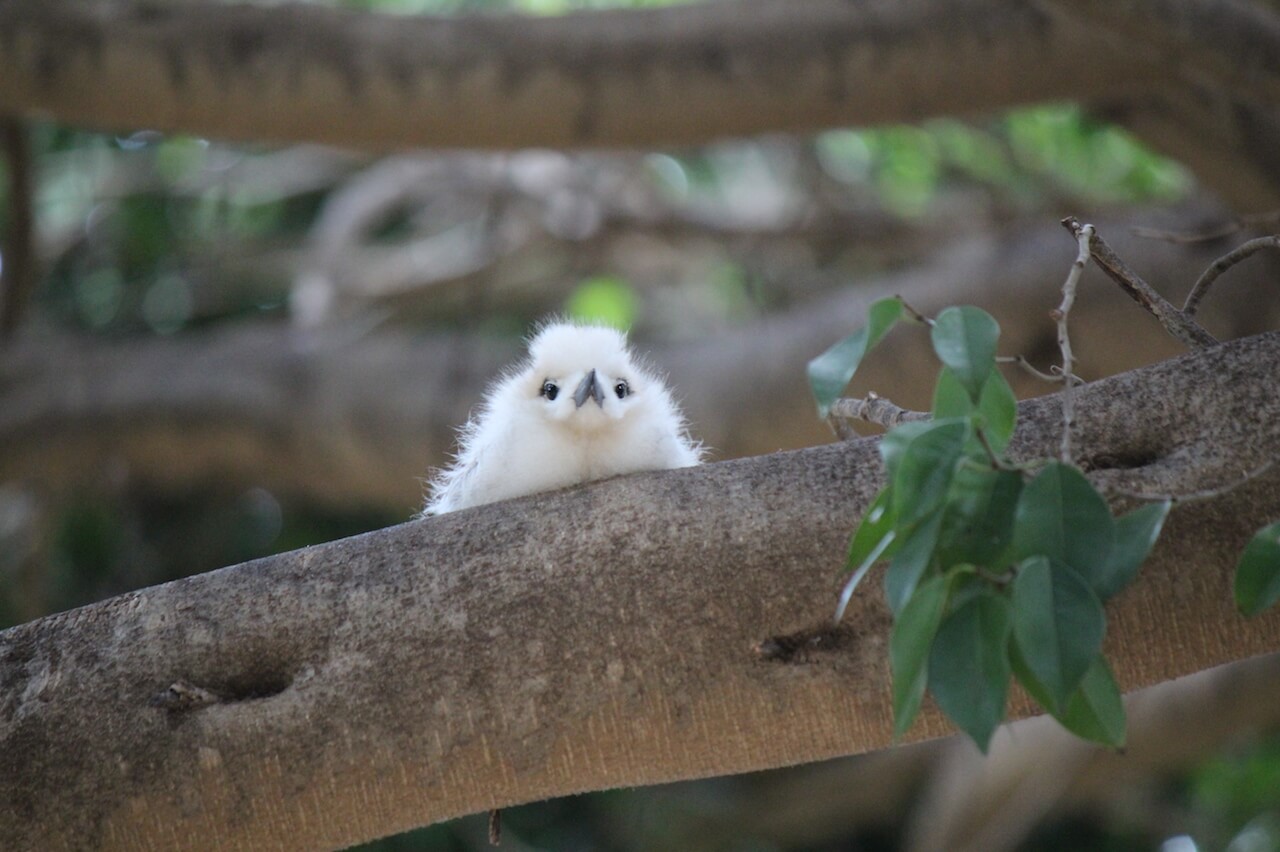
After about 36 days, a tawny chick, peppered with grey and black, emerges. Parents take turns feeding the growing chick for several months as it grows adult plumage and fledges. After fledging, the parents will continue to care for the juvenile for up to two months. They reach maturity in their third year, and normally mate for life.
About
Kingdom: Animalia
Phylum: Chordata
Class: Aves
Order: Charadriiformes
Physical Characteristics
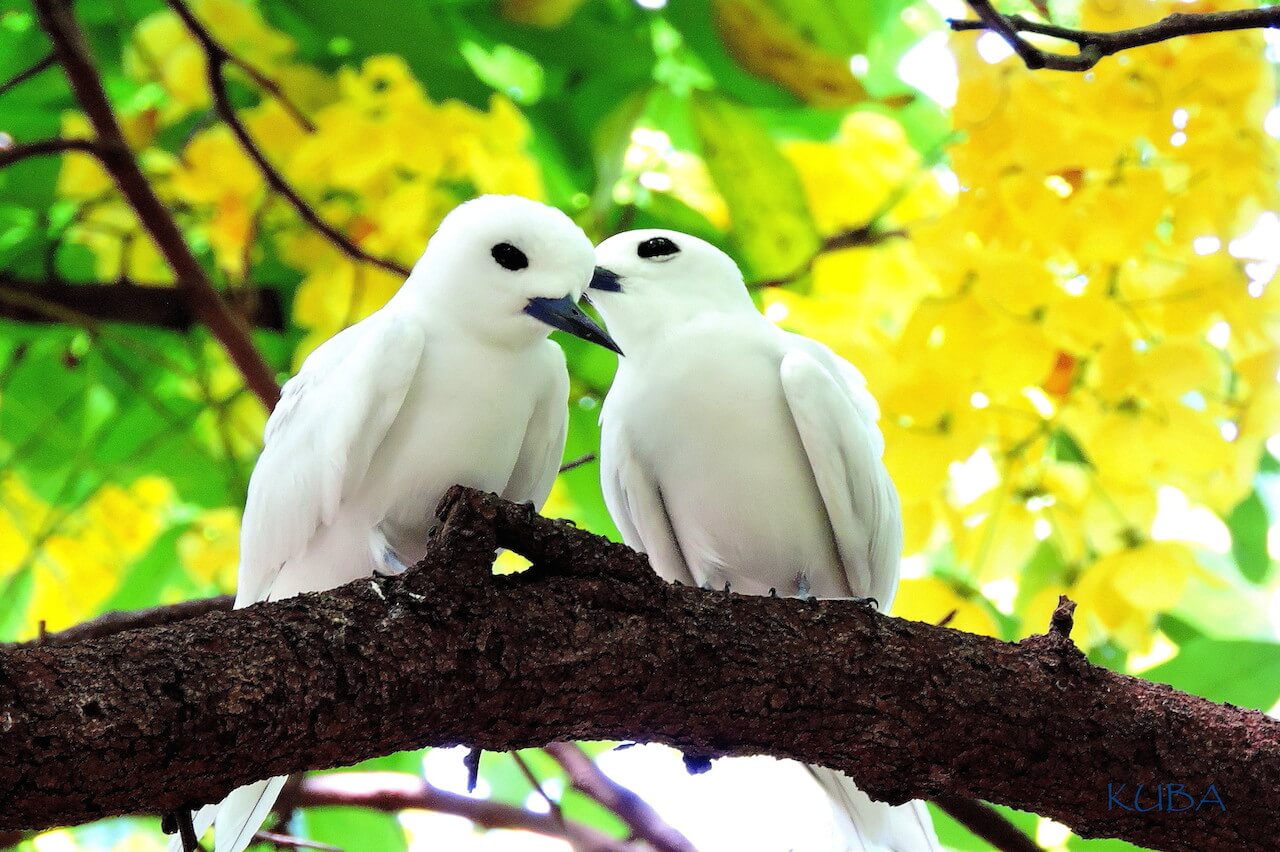
Manu-o-ku possess black eyes and a long, conical beak. Their feathers are completely white and they fly on sleek, blade-like wings that can stretch 2 feet from tip to tip.
Diet
These birds are primarily piscivores, meaning they specialize in eating fish. Among their preferred prey are young flying fish and goatfish, which they take near the surface.
Distribution
This bird is found primarily on islands, and has a wide ranger across the equatorial band of every ocean on Earth, save for the Arctic Ocean, which does not cross the equator.
Behavior
Manu-o-ku spend the day hunting at sea as far as 120 miles from their roost, before returning home in the afternoon. Ancient voyagers relied on sightings of these birds as a sign that land was close at hand.
Reproduction & Growth
Unlike many birds, they do not build nests. Instead, a single egg is laid in the depression on a tree branch or ledge, and both parents share responsibility in incubating it. After about 36 days, a tawny chick, peppered with grey and black, emerges. Parents take turns feeding the growing chick for several months as it grows adult plumage and fledges. After fledging, the parents will continue to care for the juvenile for up to two months. They reach maturity in their third year, and normally mate for life.
Notes on Conservation
Angel Terns are widespread and actually appear to thrive in human-modified environments. As such, the IUCN considers them as a species of Least Concern.
Honolulu Zoo
Wild Manu-o-ku can regularly seen flying in the airspace of the Honolulu Zoo, and a number of pairs often nest in the zoo’s many large trees.
Citations
http://www.iucnredlist.org/details/22694821/0http://hawaiianforest.com/wp/white-fairy-terns-nesting-season-2/