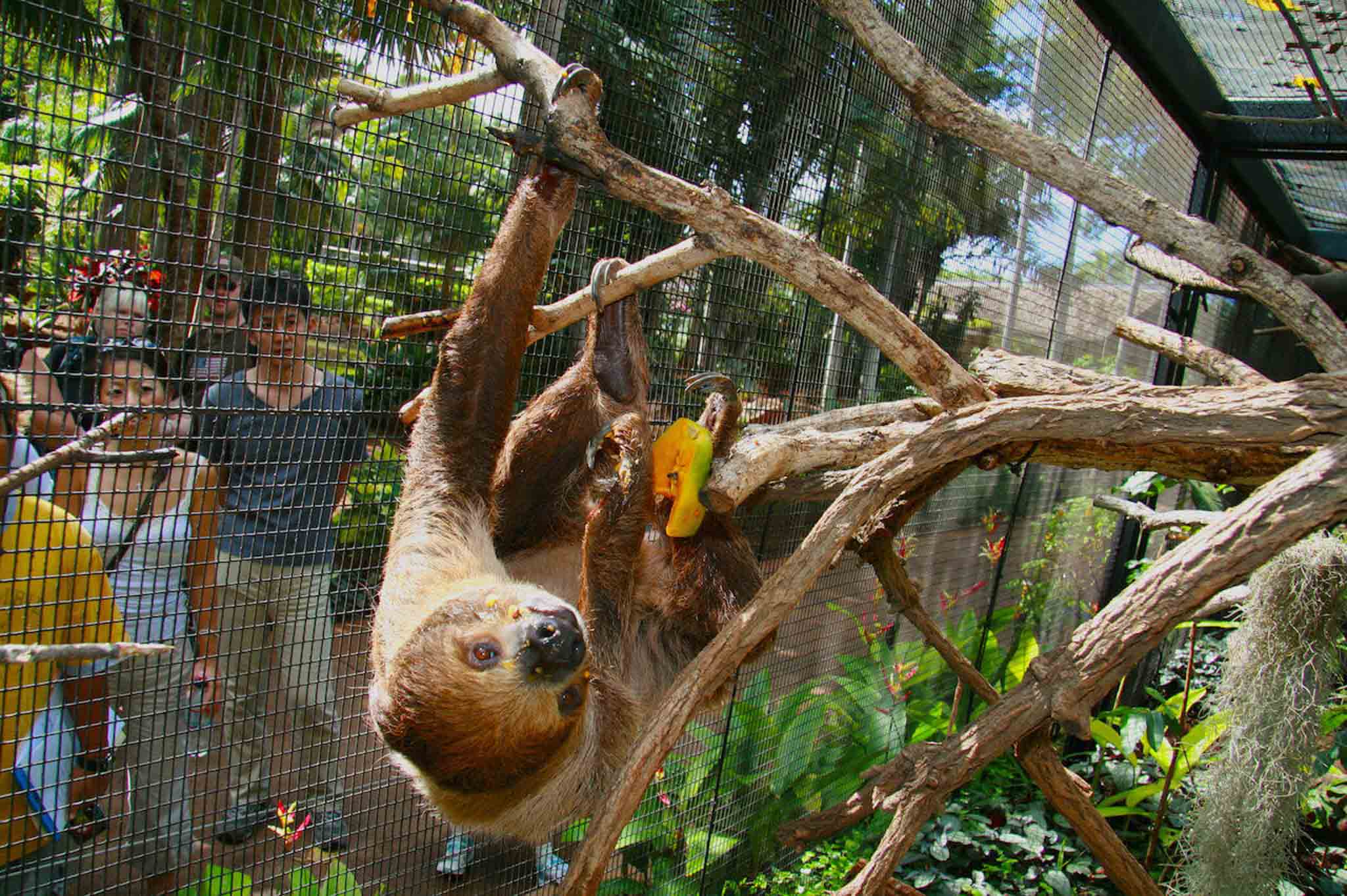
Get to Know the Linne's Two-toed Sloth
Scientific Name: Choloepus didactylus
Fun Facts
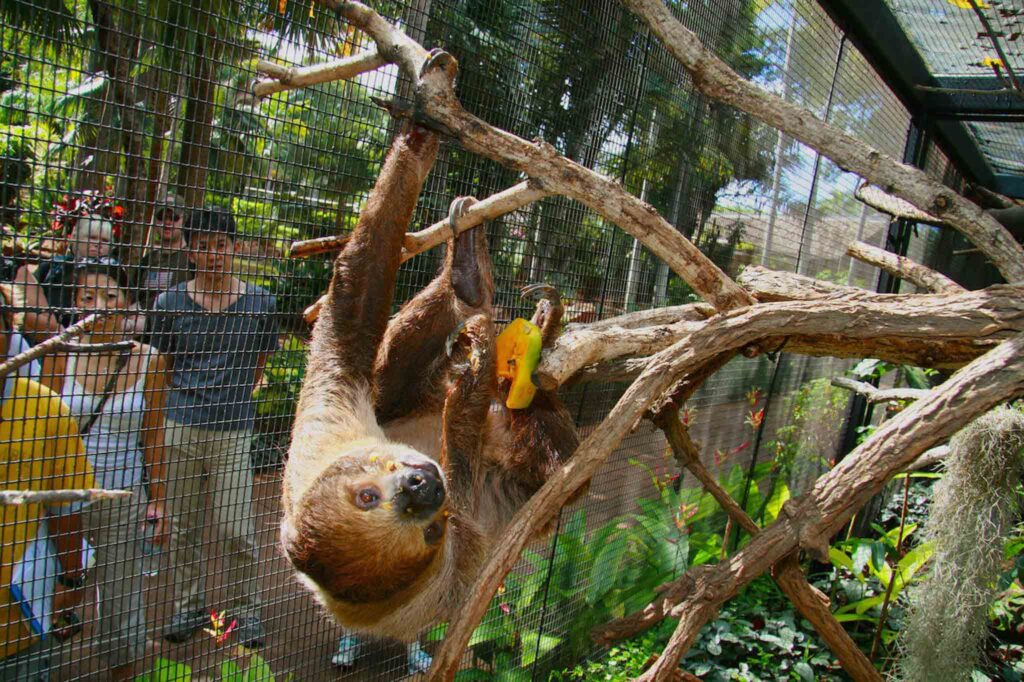
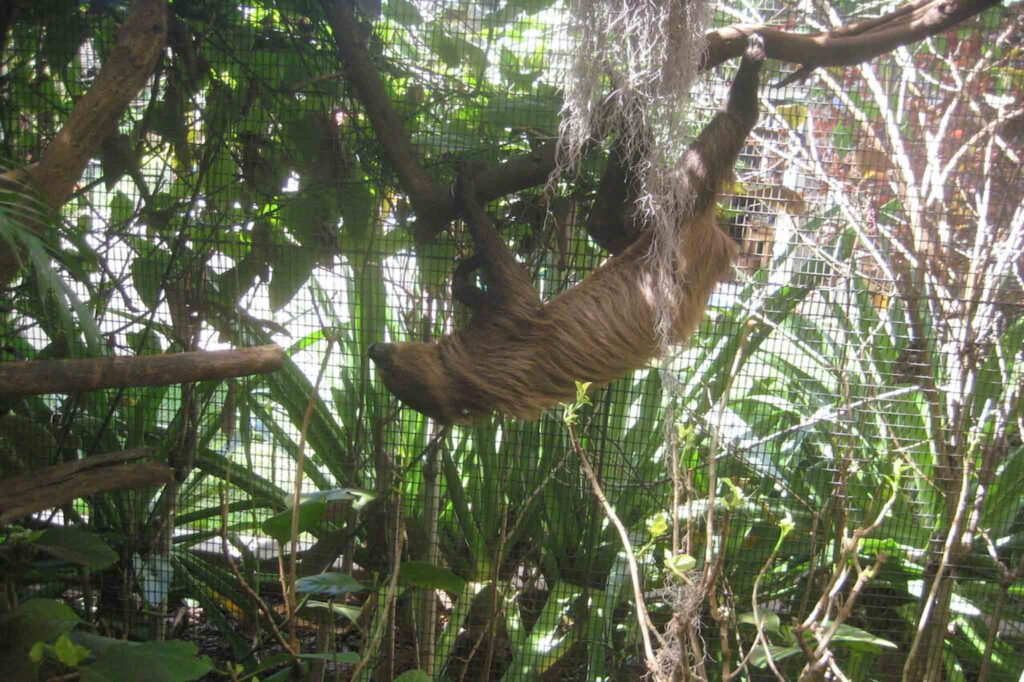
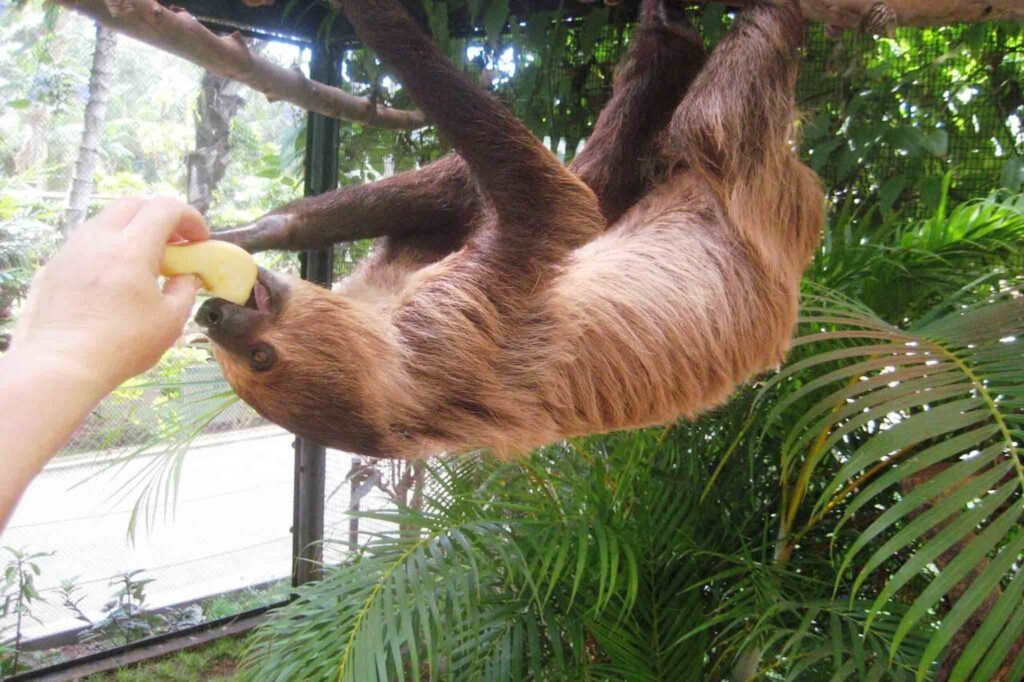
- Sloths spend almost their entire lifespan hanging upside down from a tree limb.
- Their legs are long and they have very short tails. In fact, the Linne’s two-toed sloth has no tail at all!
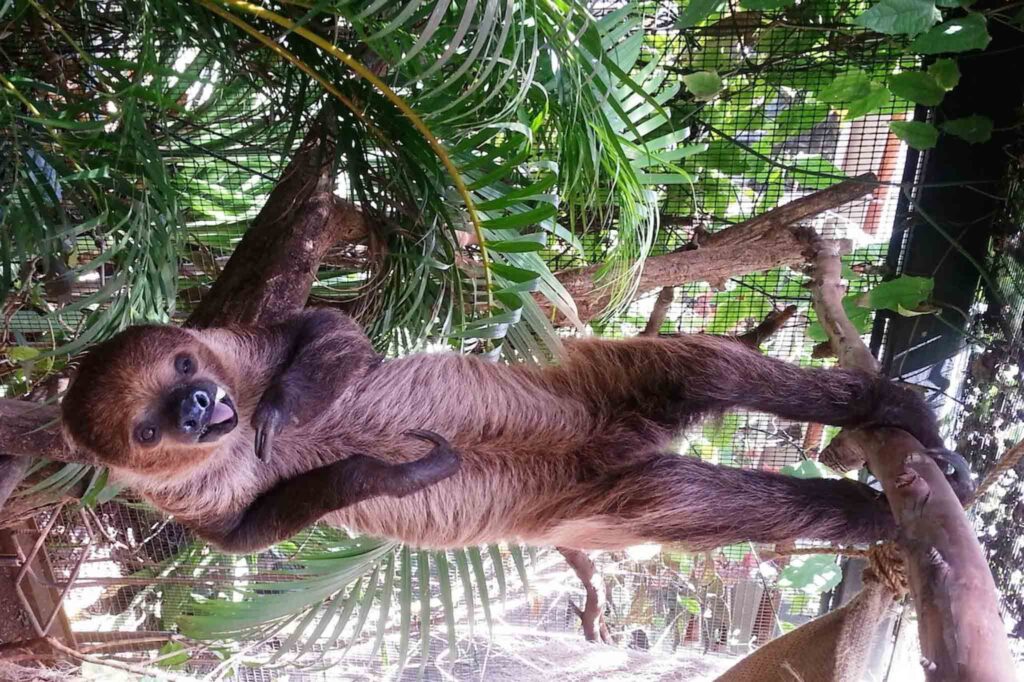
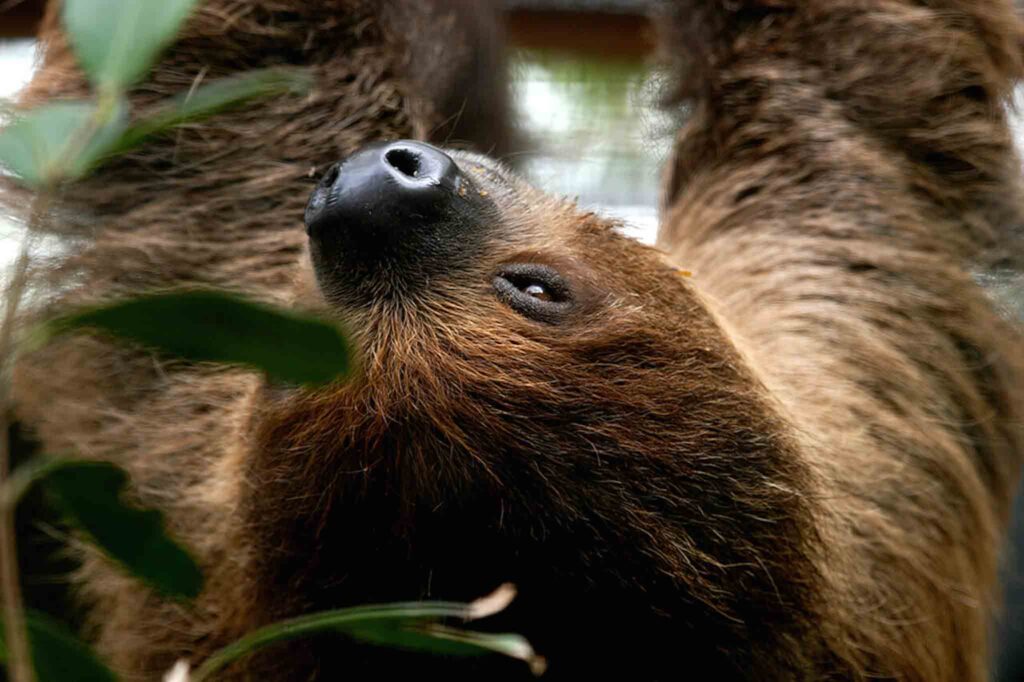
Sloths have long tan, gray, or brown fur. During the rainy season their fur appears bluish green due to a blue-green algae that covers their coat. The algae helps to further camouflage the sloth from predators, such as the jaguar, while they are in the rain forest canopy. Sloths spend almost their entire lifespan hanging upside down from a tree limb.
About
- Kingdom: Animalia
- Phylum: Chordata
- Class: Mammalia
- Order: Pilosa
Physical Characteristics
Sloths have long tan, gray, or brown fur. During the rainy season their fur appears bluish green due to a blue-green algae that covers their coat. The algae helps to further camouflage the sloth from predators, such as the jaguar, while they are in the rain forest canopy.
Sloths spend almost their entire lifespan hanging upside down from a tree limb. They have developed many features that help them adapt to such a lifestyle such as very long, curved claws that help them grip onto the tree limbs. They grow to an average length of 2 ½ feet and weigh up to 20 pounds. Their heads are short and flat with large brown eyes, tiny ears, and a short snout. Their legs are long and they have very short tails. In fact, the Linne’s two-toed sloth has no tail at all!
Distribution
Sloths are found in Central and South America in the rain forest canopy. The Linne’s two-toed sloth is found in such countries as Nicaragua, Columbia, Venezuela, Surinam, Guyana, French Guiana, North Central Brazil, and Northern Peru.
Behavior
Sloths are arboreal and spend very little time on the ground. On the rare occasion when they do venture to the ground, they move extremely slowly (which is how they received their name), and walk upright. When moving through the trees, they move with remarkable ease and grace, especially considering all their movement is done upside down. Sloths eat, sleep, mate, and give birth upside down! Sloths are also able to swim very well.
Male sloths are solitary and shy. Females will sometimes form groups. They are nocturnal and spend approximately 15 hours a day sleeping. They have the lowest body temperature of any mammal, with a range anywhere from 76 to 96 degrees. By adjusting their body temperature, they are able to conserve valuable energy.
Diet
There is no fixed mating season. Births have been recorded in all months except April, September and November. When mating, the animals hang from a branch by their arms and turn to face each other. Gestation is 5-6 months with one young per birth. The infant is fully furred, with eyes open and dentition complete. Birth weight is 11-14oz (300-400g). The female giving birth will hang by her arms. The infant remains hidden in the fur of the mother’s belly for 4 weeks. When it starts to show interest in its surroundings it will start to grab at nearby branches. At 10 weeks it starts to eat part of the mother’s meals. At 9 months it starts hanging independently from the mother.
Sexual maturity is reached at about three years in females and four to five years in males. Their lifespan in the wild is 10-20 years, 30-40 years in captivity.
Reproduction & Growth
There is no fixed mating season. Births have been recorded in all months except April, September and November. When mating, the animals hang from a branch by their arms and turn to face each other. Gestation is 5-6 months with one young per birth. The infant is fully furred, with eyes open and dentition complete. Birth weight is 11-14oz (300-400g). The female giving birth will hang by her arms. The infant remains hidden in the fur of the mother’s belly for 4 weeks. When it starts to show interest in its surroundings it will start to grab at nearby branches. At 10 weeks it starts to eat part of the mother’s meals. At 9 months it starts hanging independently from the mother.
Sexual maturity is reached at about three years in females and four to five years in males. Their lifespan in the wild is 10-20 years, 30-40 years in captivity.
At the Honolulu Zoo
Male: Quando, 2003 (DOB)