Get to Know the Inland Bearded Dragon Lizard
Scientific Name: Pogona vitticeps
Like most lizards, they are not vocal unless hissing when threatened. Instead, these animals communicate with visual signals such as color changing, head bobs, and arm waving.
Physical Characteristics
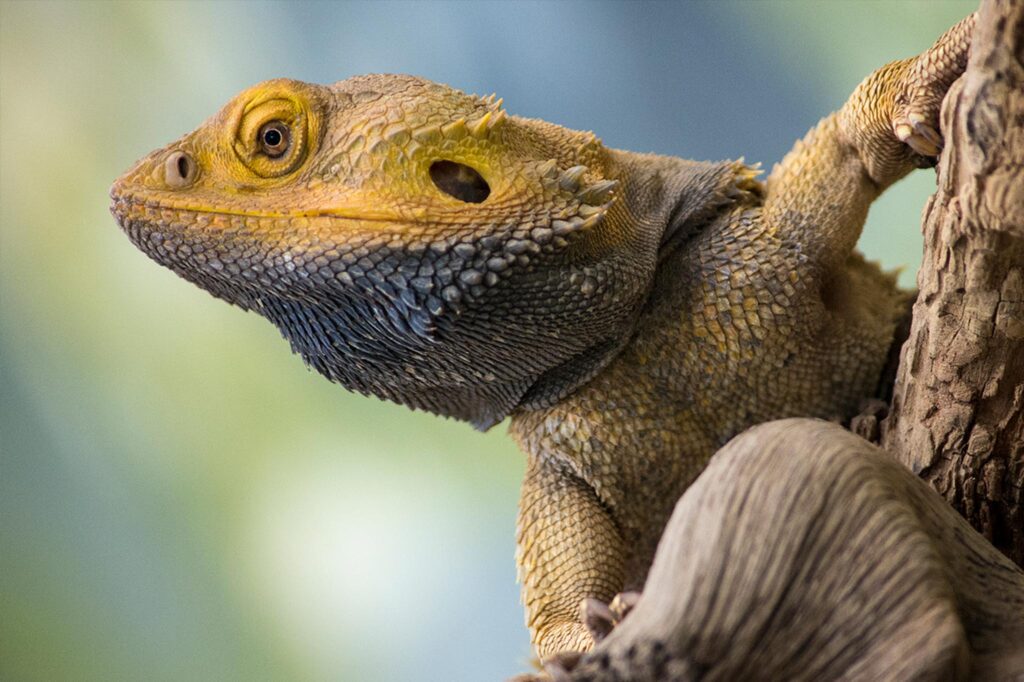
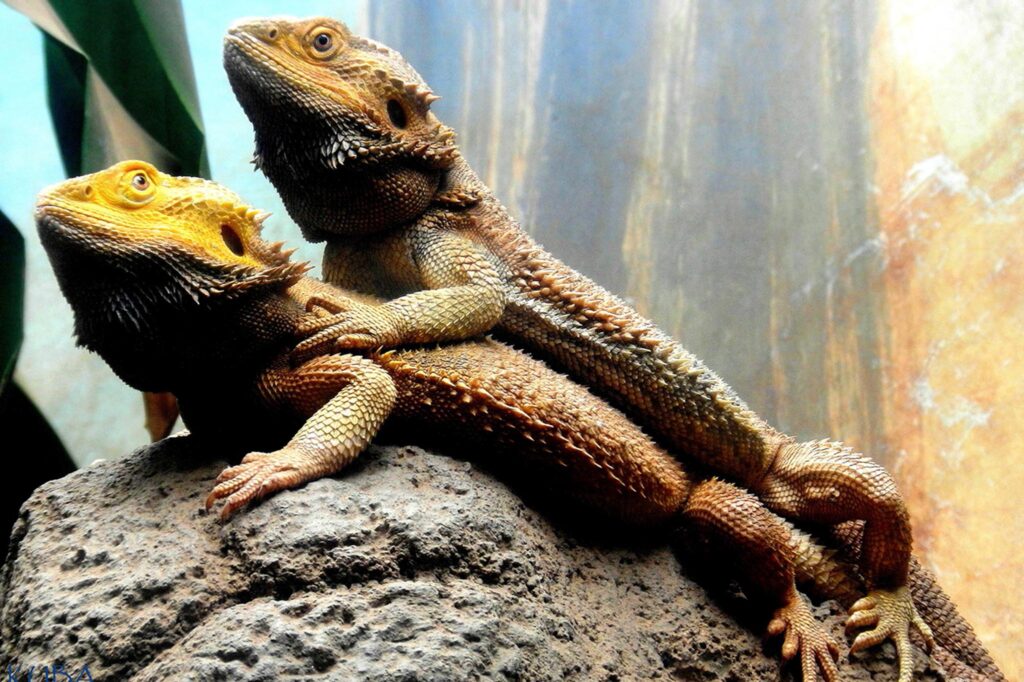
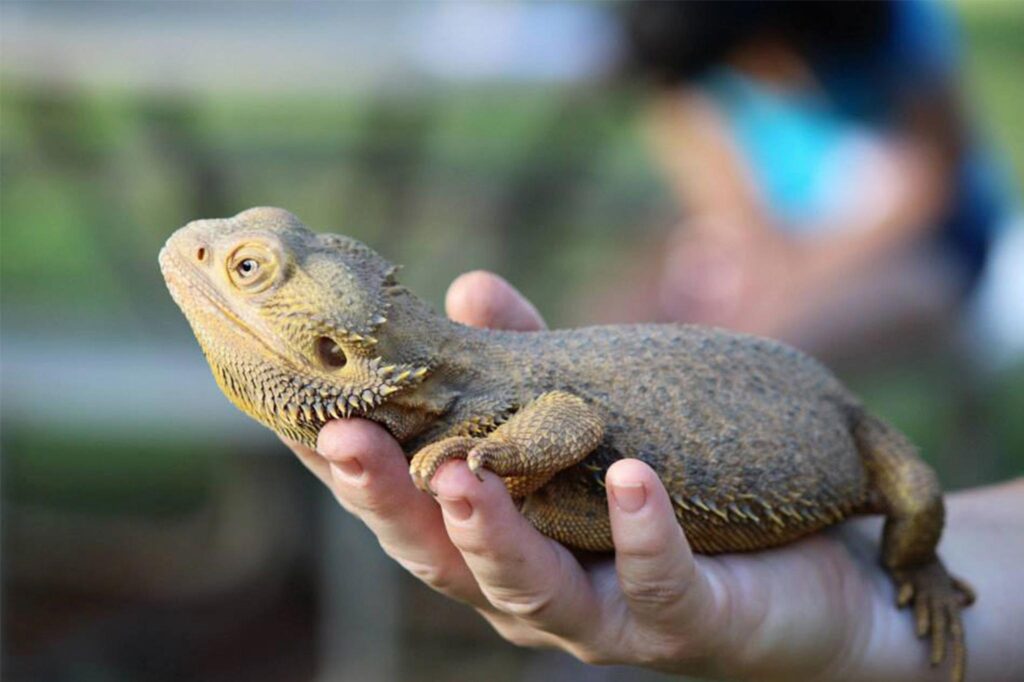
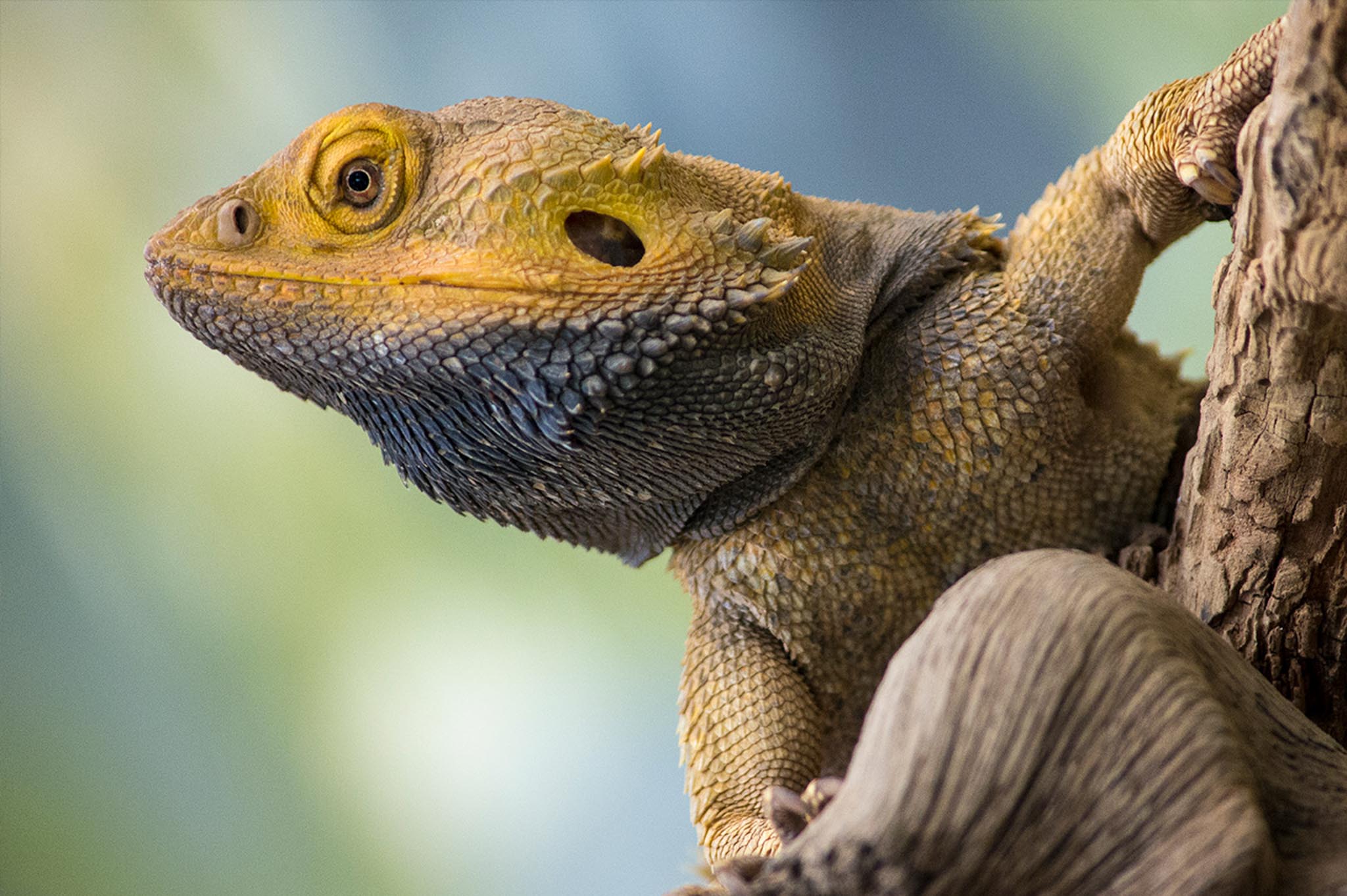
This lizard may reach up to 24 inches in length, with over half of that being their tail. They have a wide head covered with small, irregular scales and a broad, fleshy tongue.
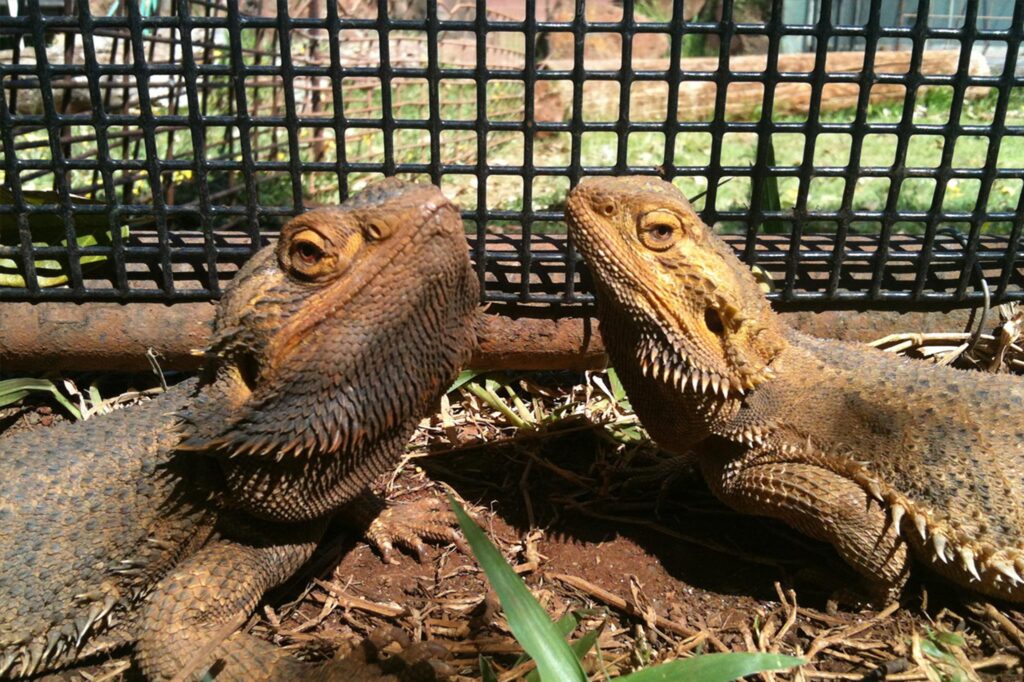
Scales on the throat and skin along the sides of the head have spiny extensions and can be spread in a threat display. Their bodies are somewhat flat and robust. An orderly row of spiny scales run along the lateral edges of body and continue over the forearms, which end in well-developed, 5-toed limbs.
Bearded dragons range from pale gray to brown, reddish-brown, or almost black with pale oblong blotches, in color. Often, they have a dark post-ocular stripe and greenish-yellow mouth lining and their tails are often banded. They have a moderate color-changing ability and can go from light to dark. Bearded Dragons can also run on hind legs for short distances.
Diet
This omnivorous lizard enjoys a mixed diet of fruit, flowers, insects, and occasionally small vertebrates.
Distribution
Reproduction & Growth
Males will advertise their dominance with head bobs, and receptive females signal their intent with hand waving gestures.
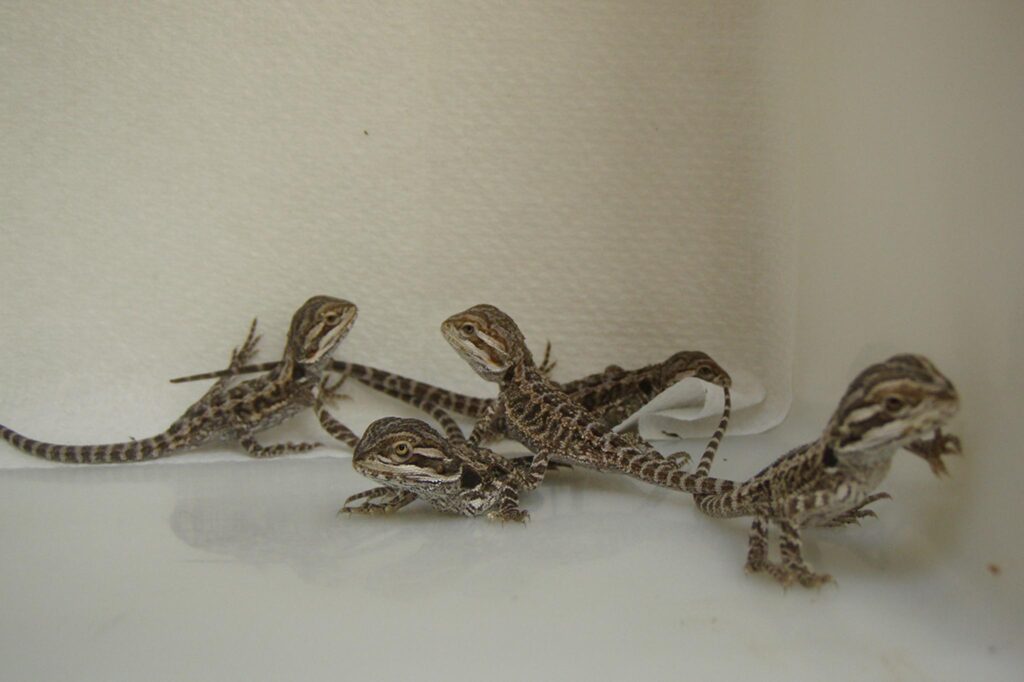
A female can lay clutches of up to 30 eggs. They are buried in the sand and left to hatch after 60-80 days. The gender of offspring are determined by temperature at the 90 degrees Fahrenheit mark.
Behavior
Like most lizards, they are not vocal unless hissing when threatened. Instead, these animals communicate with visual signals such as color changing, head bobs, and arm waving.
Notes on Conservation
Bearded Dragon populations are stable and they are readily adaptable to human-causes changes. They are considered a species of Least Concern.
At the Honolulu Zoo
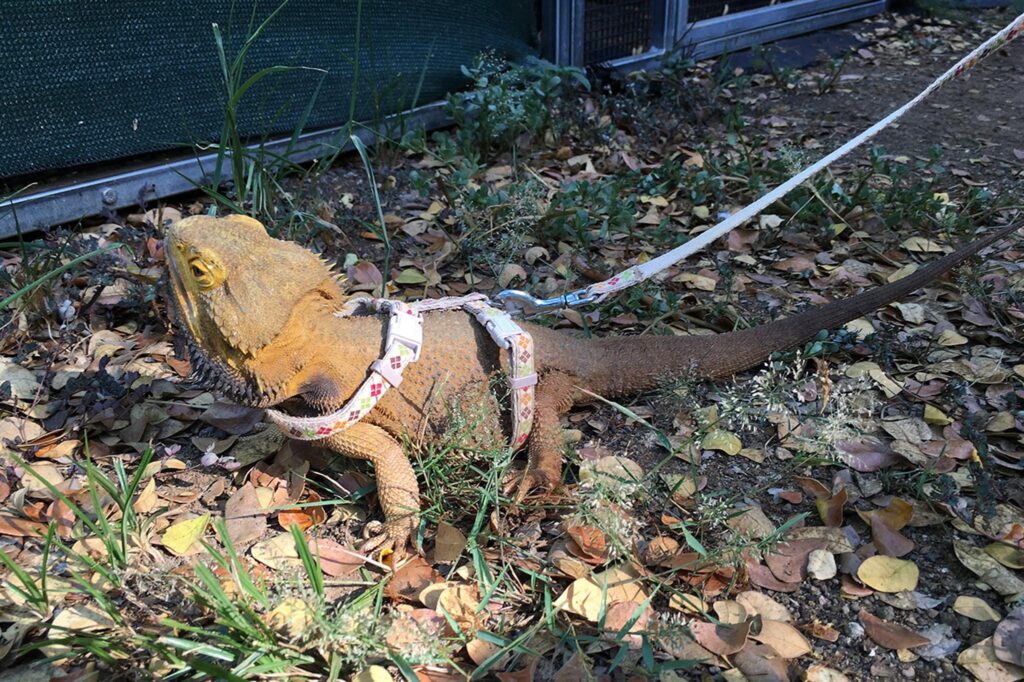
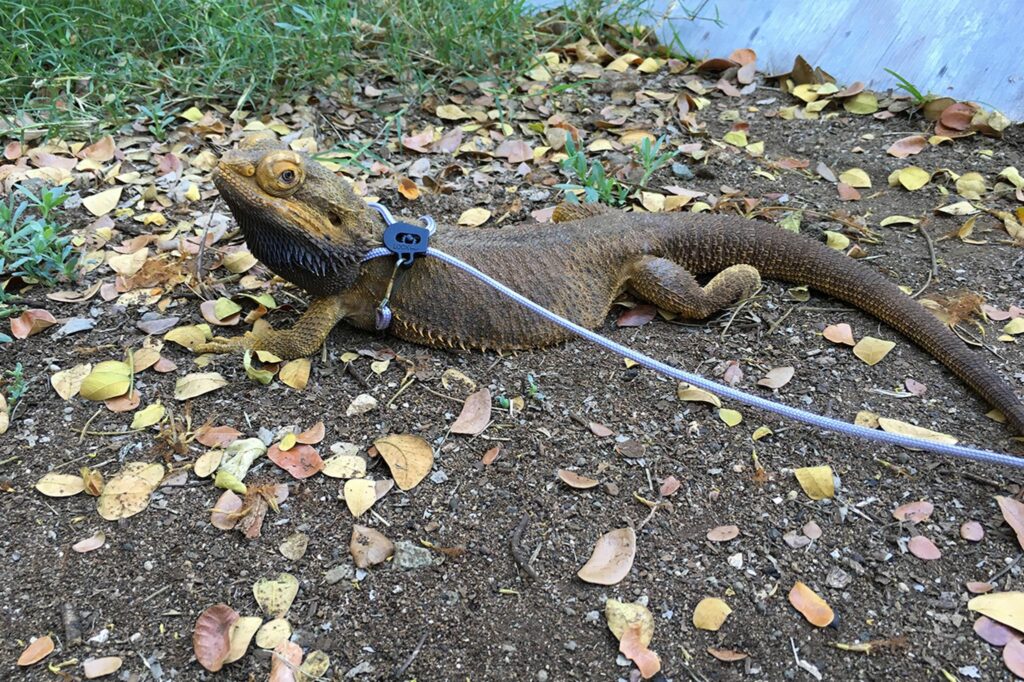
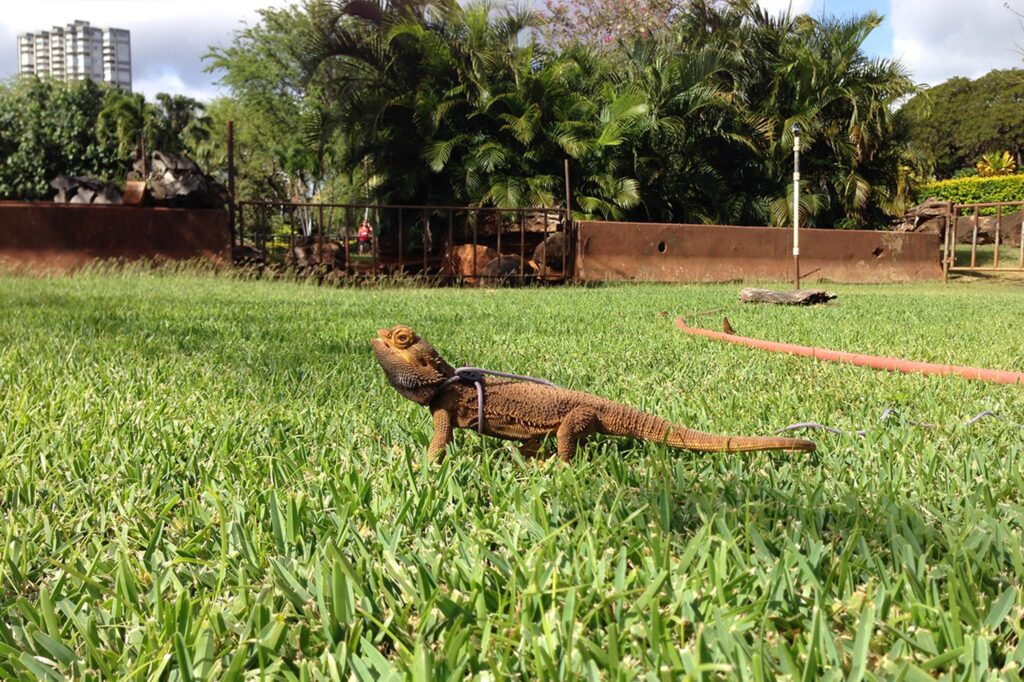
Our Bearded Dragons are often acquired as confiscated pets from illegal owners. Occasionally however, some of our adults will lay eggs and bless the zoo with a new generation. Currently they may be found living in our African Savanna Kopje Rocks area, until their new exhibit in the Reptile Complex is completed.
Citations
Kis, Anna; Huber, Ludwig; Wilkinson, Anna (January 2015). “Social learning by imitation in a reptile (Pogona vitticeps)”. Animal Cognition. 18 (1): 325–331. doi:10.1007/s10071-014-0803-7.