Get to Know the Fairy Bluebird
The nest of the Fairy bluebird is built in a sapling or thin bushes deep in the forest, usually about 20 feet above ground. The nest is a tidy open cup of rootlets and twigs camouflaged with moss.
These birds normally lay two greenish-white oval-shaped eggs heavily marked with brown and gray splotches and streaks. The young are born altricial.
About
Scientific Name: Irena
Kingdom: Animalia
Phylum: Chordata
Class: Aves
Order: Passeriformes
Physical Characteristics
The family Irenidae consists of three groups of colorful forest-loving birds. They are the Leafbirds, the Ioras and the Fairy bluebirds.
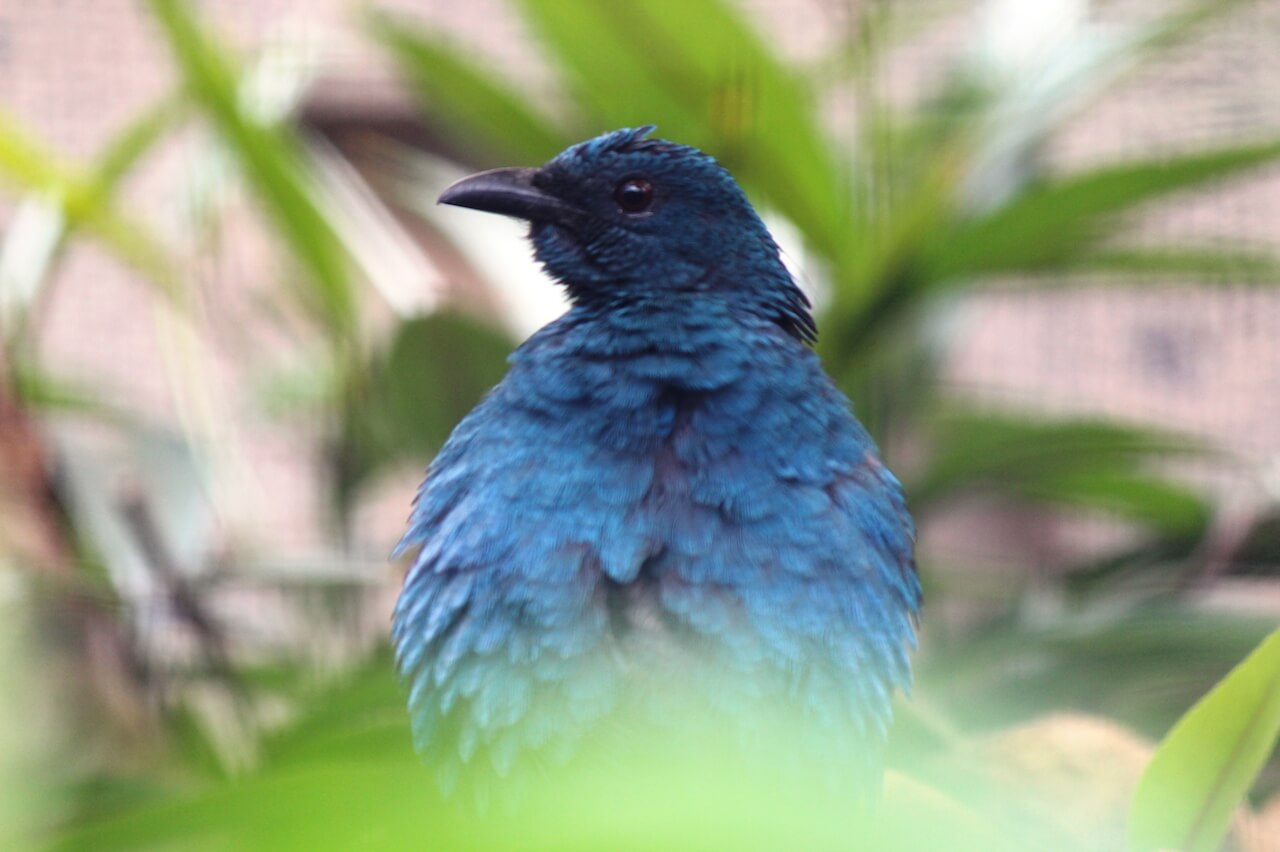
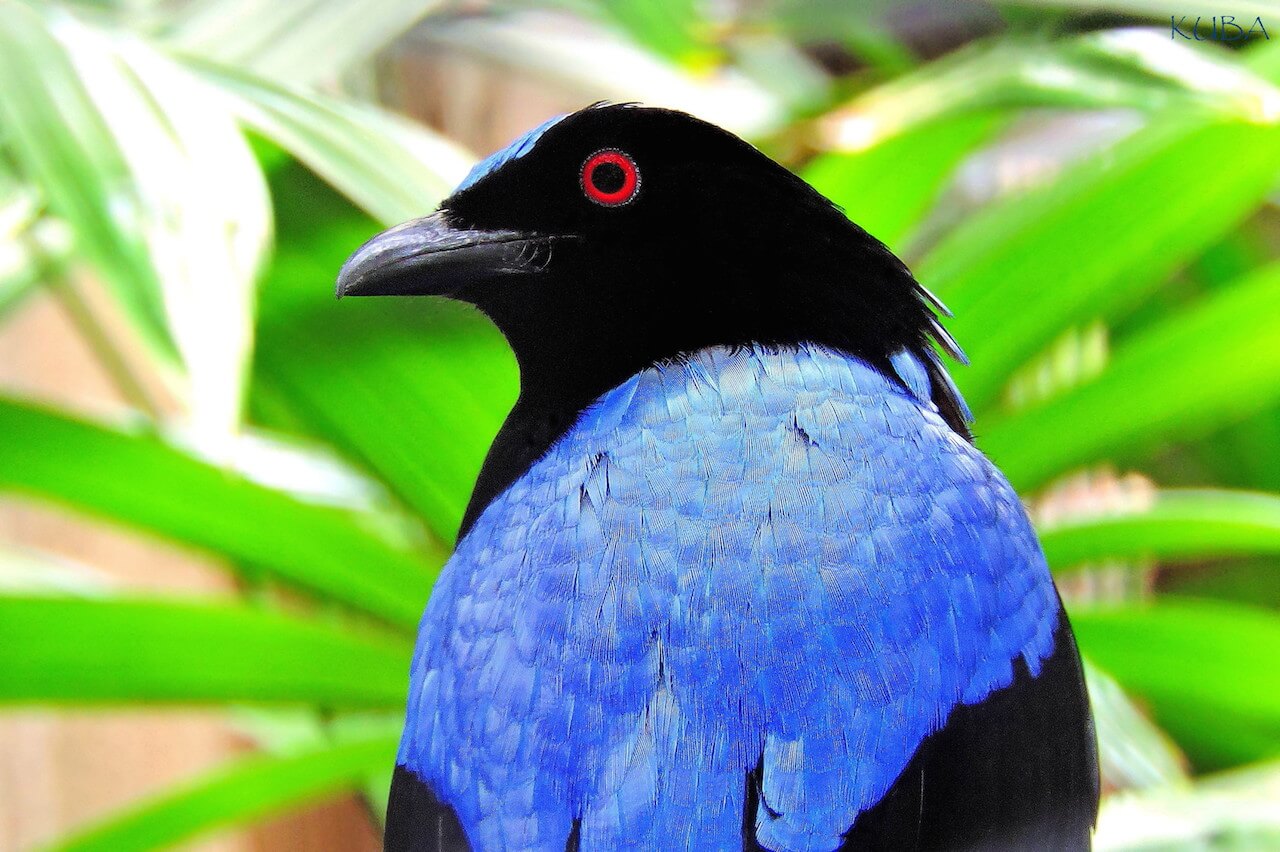
The Fairy bluebird is the most colorful and the largest species, having a length of 10 inches. The male of this species has the crown, hind neck, back, rump and upper tail-coverts colored a brilliant turquoise, the remaining plumage being dark cobalt-blue or black. The female is a dull blue-green or purple. The males are always more brightly colored than the females.
Diet
In the wild, Fairy bluebirds feed largely on fruit and insects. They are particularly fond of wild figs, and also eat some flower nectar.
In the Zoo, these birds are fed grapes, shredded apple and papaya. They are also fed commercially prepared “Bird of Prey” and “Soft-bill” bird mix. In the breeding season especially, they are fed mealworms and fruit fly larvae. They feed their young insects.
Distribution
These birds inhabit the forests of the Himalayas, northern India, Burma and Indochina.
Behavior
Fairy bluebirds live in the forest crown and are gregarious fruit-eaters. They live in pairs or small troops and keep to the evergreen lowland forest.
They have a very loud contact call and short sharp whistles. While not migratory, they wander localy depending on the seasonal abundance of fruit. They usually travel quietly in pairs though the forest, but when a large fig tree is bearing, scores of birds may gather for the banquet together.
In the heat of the day Fairy bluebirds sometimes descend in flocks to bathe in forest streams. During the breeding season the flock splits into pairs.
Reproduction & Growth
The nest of the Fairy bluebird is built in a sapling or thin bushes deep in the forest, usually about 20 feet above ground. The nest is a tidy open cup of rootlets and twigs camouflaged with moss.
These birds normally lay two greenish-white oval-shaped eggs heavily marked with brown and gray splotches and streaks. The young are born altricial.